


NEWYou can now listen to Fox News articles!
As the Trump administration weighs its next move on Iran, one of the most advanced aircraft in the U.S. arsenal has taken up position closer to Tehran.
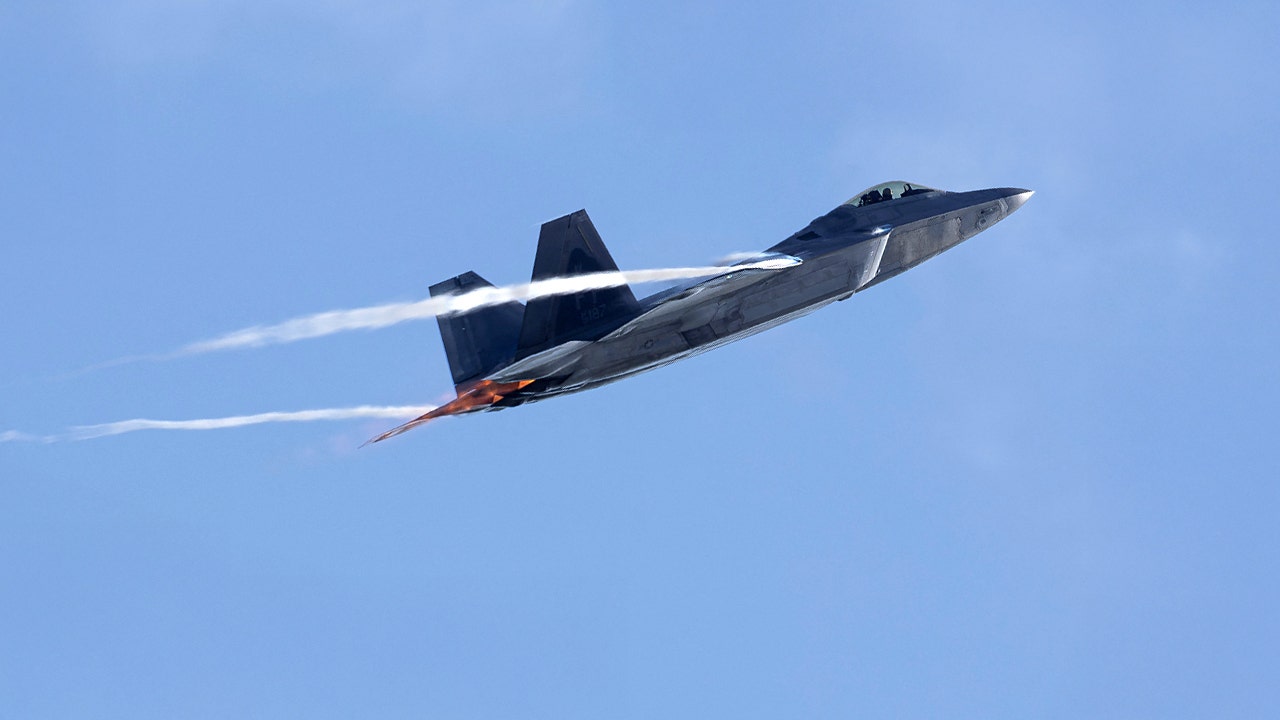
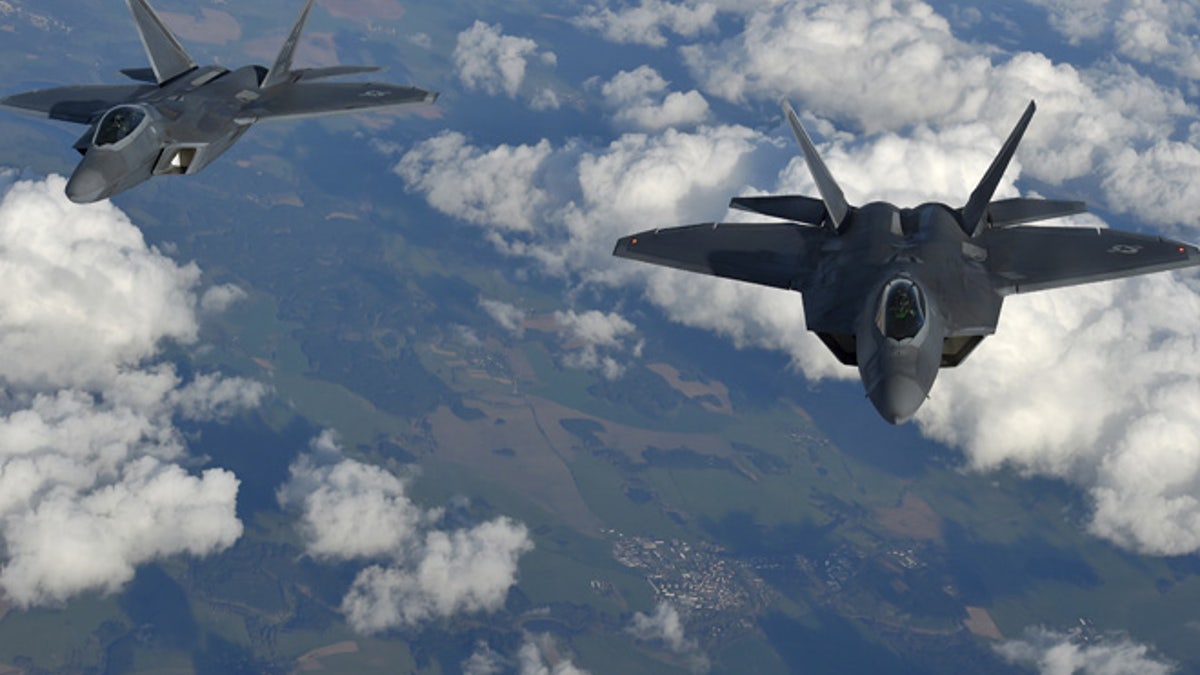
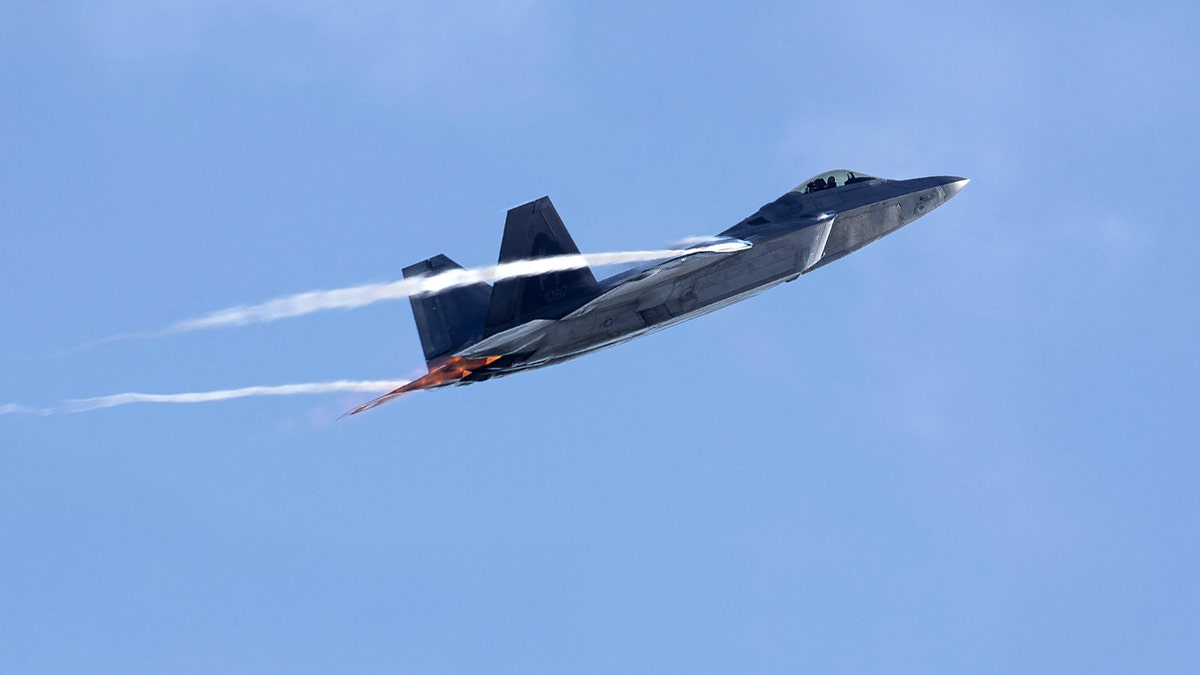
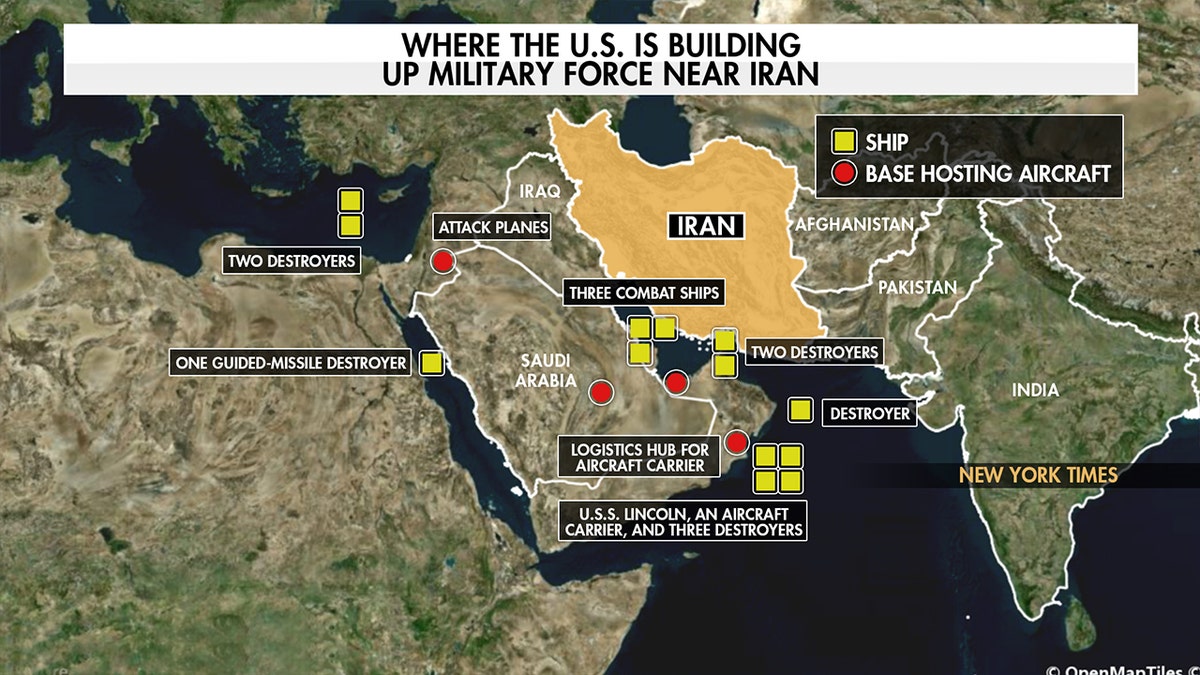
Eleven U.S. Air Force F-22 Raptor stealth fighters have arrived at Israel’s Ovda Air Base in the country’s south, Fox News reported, marking the first-ever operational deployment of American combat aircraft to Israel. The move comes amid a broader U.S. military buildup in the region not seen at this scale in years and as concerns grow over Iran’s nuclear program and missile capabilities.
For American decision-makers, the significance is straightforward: The F-22 changes the military equation.
“The F-22 is indeed the most air-to-air capable fighter in the world; nothing comes close to it in the air-to-air role,” said retired Lt. Gen. Joseph Guastella, former deputy chief of staff for operations at U.S. Air Force headquarters. During a May 26 webinar hosted by the Jewish Institute for National Security of America (JINSA), he described its presence as “a very clear deterrent signal” that allows the United States to “negotiate with strength.”
Designed to establish and maintain air superiority, the F-22 can operate in heavily defended airspace and suppress enemy air defenses. In any potential strike scenario against Iran, that capability would be critical. Before bombers or strike aircraft can reach hardened nuclear or missile targets, someone has to clear the skies. That is the F-22’s core mission, former generals explained in the webinar.
Guastella underscored what forward positioning means in practical terms. “The advantage of the large force that’s there is that it can hold almost any target in Iran at risk … if that’s what the president wants to do,” he said.
Retired Lt. Gen. Charles Moore, former deputy commander of U.S. Cyber Command, said in the webinar that the deployment is about expanding presidential options rather than signaling a predetermined strike.
TRUMP ISSUES STERN IRAN WARNING AS TEHRAN ANGRILY REACTS TO SPEECH AMID MUTED WORLD REACTION
“There is a lot of combat capability that’s been moved into the region … the more capability, the more assets we put, the more options that the President has. We don’t box him in,” Moore said.
He added that the posture allows the United States “to be prepared for a long-term type of deployment and sustainment of combat capability if that’s what the President decides he wants us to do.”
Trump signaled Friday that diplomacy remains his preference but did not rule out force. Speaking to reporters as he departed the White House for a trip to Texas, he said he was not happy with Iran and wants to make a deal with Tehran, but warned that “sometimes you have to” use military force. He added that Iran remains unwilling to forswear nuclear weapons as demanded by the United States.
The choice of Israel as the deployment site also matters. Unlike some Gulf bases, where operational restrictions can apply, Israel offers fewer political constraints, they explained. That gives U.S. planners additional freedom of action in a fast-moving crisis.
THE ONLY MAP YOU NEED TO SEE TO UNDERSTAND HOW SERIOUS TRUMP IS ABOUT IRAN
JINSA’s fellow for American Strategy, Jonathan Ruhe, said the move follows a JINSA recommendation to expand U.S. basing options in Israel, outlined in a report the organization published last fall.
That report argued that forward basing in Israel would enhance U.S. flexibility and deterrence in the region. The organization has for months pushed the idea that Israel could function as a land-based platform for American airpower in the Middle East.
Former Israeli Air Force commander Maj. Gen. (ret.) Amikam Norkin said deploying such high-end aircraft to the region is not routine and framed the move as both operational and strategic. “It presents the American commitment to Israeli security once you are landing with your best airplane in Israel,” he said, adding that regional actors “understand the very strong commitment of the American government, American military, American President, to the national security of Israel.”
At the same time, he rejected the idea that the deployment represents a shift toward American “boots on the ground” in Israel.
“Well, it’s not the first time that America is on the ground. As you remember the 12-Day War, the American Air Defense System supported us. So it’s already been done,” Norkin said.
CLICK HERE TO DOWNLOAD THE FOX NEWS APP
More broadly, he emphasized that Iran is not solely an Israeli problem. “The Iranian threat, it’s not just an Israeli threat, it’s a regional threat, and the American forces support the region, not just Israel.”
Adm. Brad Cooper, head of U.S. Central Command briefed President Donald Trump at the White House on Thursday on potential military options targeting Iran, a source familiar with the meeting confirmed to Fox News. The president’s top military adviser, Joint Chiefs of Staff Chairman Gen. Dan Caine, also attended the briefing.
For now, officials describe the move as part of preparedness rather than a prelude to immediate conflict. But the arrival of America’s premier air-dominance fighter on Israeli soil signals a new phase in U.S.-Israel military coordination and a clear message to Tehran: If the president chooses to strike, the tools are already in place.
Related Article

Read the full article here