

Key Takeaways
- Many beginner shooters struggle to translate dry fire practice to live fire results due to various issues.
- Using a shot timer helps record performance speed and improves skill assessment during training.
- Scaled targets simulate real distances in small training spaces, enhancing depth perception and accuracy.
- Shooters have several options for scaled targets, including printable DIY targets, cardboard scaled targets, modular target systems, and virtual reality training.
- Introducing proper scaled targets into a shooting practice environment significantly increases training quality.
Estimated reading time: 6 minutes
Have you ever spent time dry firing throughout the week, only to get to the range and feel as if none of what you worked on actually translated into better results? This is common, especially for beginner shooters, and can be the symptom of numerous root causes.
From a skills perspective, many shooters drastically overestimate in dry fire what they would actually be able to visually process in a live fire setting. Likewise, many new shooters aren’t consciously “calling their shots” in dry fire, which means to actively predict where a bullet would have landed on target based off of the last seen sight picture or movement.
Secondly, a shooter could be lacking in collecting accurate data. For most skills past basic safety and fundamentals, it is necessary to have a good understanding and reference of speed.
A shot timer is a tool used for recording the time element of training. For example, in a live fire setting, it will record exactly when each shot is fired. In a dry fire setting, the par time feature can be used to initiate a start sound and then indicate once a set amount of time has passed.
If a shooter is practicing without a shot timer, they will not have a true reference as to how fast or slow they are able to perform a skill. A shot timer will give a shooter a clear depiction of where their skillset stands.
It is also possible for skill to get lost in translation if there is a large discrepancy in the gear being used in a dry fire setting versus a live fire setting.
For example, if a shooter wants to improve their reloads but the magazine weight they are practicing with in their dry fire is significantly lighter than it would be full of rounds, it will be problematic. Similarly, there is a difference in using random objects as targets as opposed to proper scaled targets.
Scaled targets accurately simulate distance within a small space, thus creating realistic and repeatable practice sessions, whereas random objects do not.
It’s helpful to identify where a shooter can adjust or improve their training environment. The following will focus on the final element, the use of scaled targets, and their effectiveness in a dry fire training environment.
Depth Perception in Training
No shooter can accurately shoot a small target as fast as they can shoot a big one. Therefore, visually recognizing target difficulty and instantly applying the appropriate technique are both relevant skills to practice.
If a shooter chooses to use random objects around the home as targets, they will still gain some value from the practice. However, they are less likely to train their brain to accurately recognize true depth and distance.
This is why having scaled targets that are based on a true reference is helpful and helps to develop a more accurate sense of depth and visual confirmation. Scaled targets will also portray the actual shape of the target being used in live fire training.
How Scaled Targets Work
Scaled targets are full sized targets that have been sized down to accurately simulate farther distances within a small training space, such as in a home or garage.
A majority of shooters do not have twenty five yards of space in their home dedicated to dry fire. Therefore, in order to accurately simulate that degree of depth within a more reasonably sized space, scaled targets with correlating dimensions are helpful.
A 1/3 scale target is sized to be one third of the dimensions of the standard target that it is replicating. A 1/6 scale target is one sixth of the size, and so on.
For example, for every one foot of distance a 1/3 scale target is placed at, it will accurately simulate one yard of distance. To represent five yards of distance with a 1/3 scale target, a shooter would place it five feet away from where they are standing.
Each scale size has its own formula, but the concept applies.
Scaled targets help add variety to training in the most visually accurate way and make all of it possible in a confined space.
Scaled Target Options
There are currently three main options for scaled targets on the market, plus a bonus option.
1. Printable DIY Scaled Targets
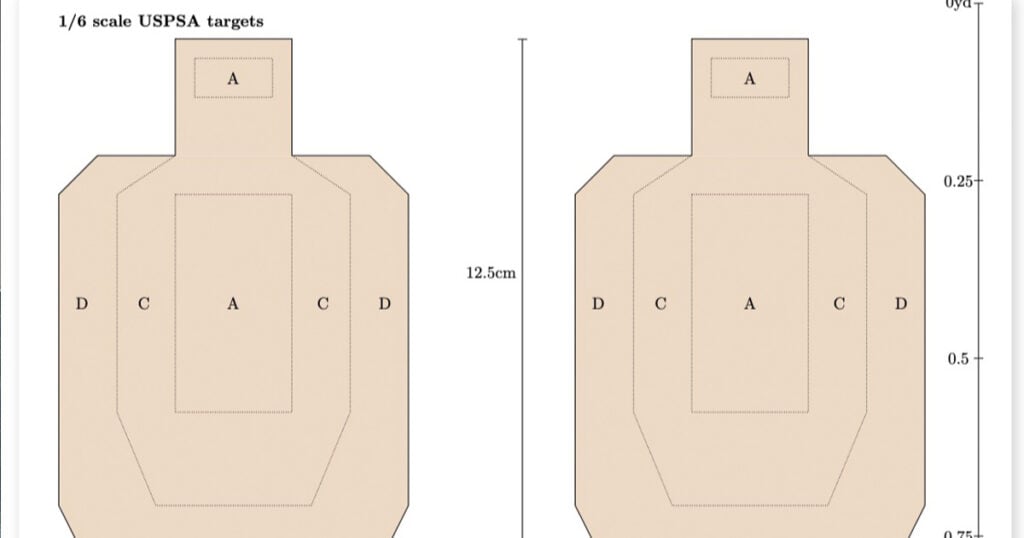
There are various websites that offer “do it yourself” printed targets according to scale size on basic printer paper.
This is the cheapest option, but it does not offer much longevity.
2. Cardboard Scaled Targets

The next option is to order pre cut cardboard scaled targets.
These are typically found in the $25–$40 range but also have limitations. They are strictly two dimensional, have no secure mounting mechanism apart from taping them to the wall, and will get torn up fairly quickly. Any form of paper is prone to water or humidity damage, especially during travel.
3. Modular Plastic Target Systems

The third option is for shooters who want more than what standard cardboard targets can offer.
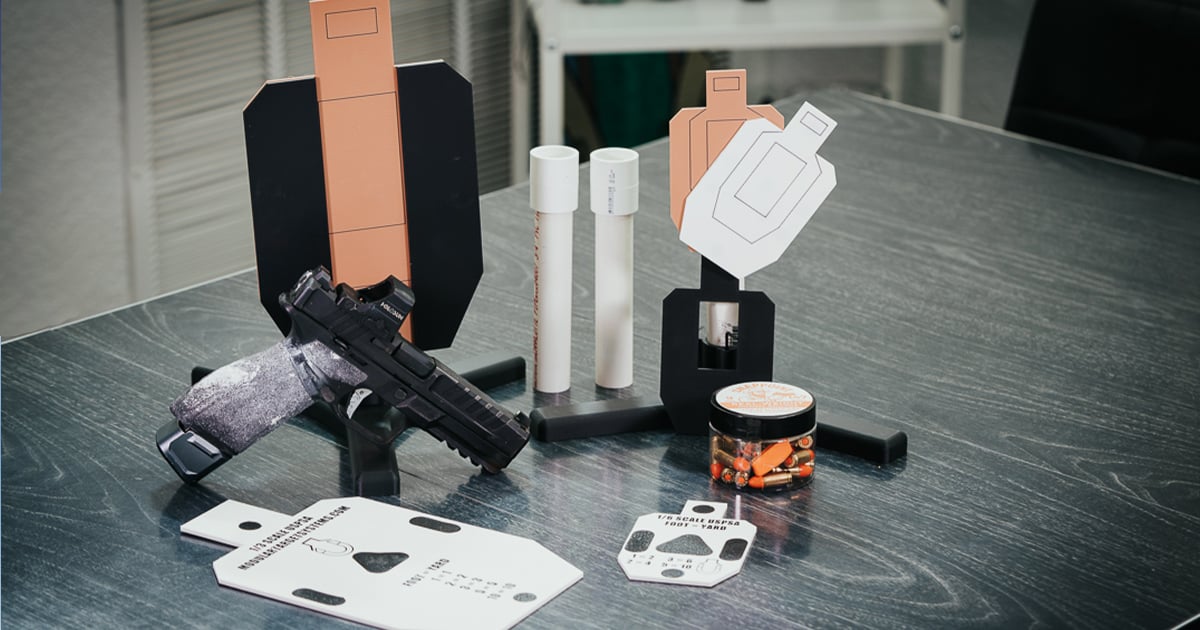
Modular Target Systems makes robust magnetic plastic scaled targets that upgrade the traditional cardboard concept. With these, shooters can take advantage of secure mounting stands to build three dimensional stages and drills.
Target faces can be swapped instantly for hundreds of combinations, which saves training time. They can also be transported or stored easily without taking up excessive space or risking damage.
They are not as cheap as cardboard, but they will last significantly longer.
4. Virtual Reality Training
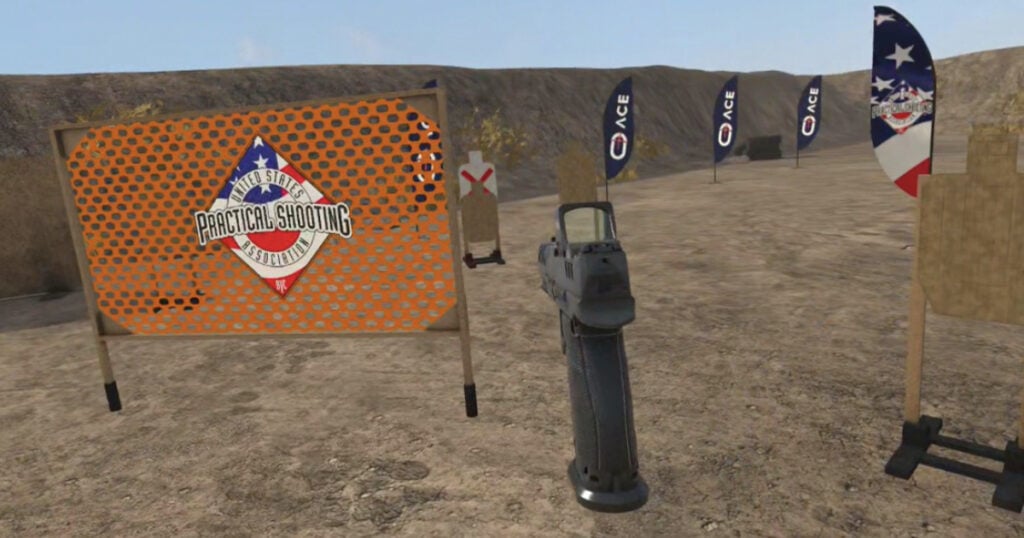
The fourth and most expensive option is virtual reality. VR training has captured a lot of interest, but it receives mixed reviews on whether it provides true depth perception.
Every shooter has their own idea of what their dry fire training is worth to them. Regardless of which option they choose, introducing proper scaled targets into the training environment will increase the quality of time spent practicing.
Read the full article here